Every tattoo changes as it ages. That is not a warning, it is skin biology. Ink sits in the dermis, and over years the lines soften and spread slightly as the skin renews itself and sun, friction, and time do their work. In Gastonia, artists have the same conversation weekly: fine line work that looks delicate and sharp today, against bold work built to hold its shape for decades. Neither is the right answer on its own. The right answer depends on size, placement, and how you want the piece to read in twenty years.
You cannot stop a tattoo from aging, but you can choose a design that ages the way you want, and you can do the aftercare and sun care parts yourself. This guide covers both sides of that line.
Why lines spread
A tattoo needle deposits ink below the surface, and the body treats those particles as permanent guests it keeps tidying around. Over years, the crisp edge of a fresh line relaxes. On a thick, bold line, a small amount of spread is barely noticeable, because the line has width to spare. On a hair-thin line, the same spread can close small gaps, blur lettering, and turn delicate detail into a soft shadow. Small, tightly packed fine detail ages fastest of all, which is why an artist may suggest sizing a fine line design up: more space between lines is more years before they meet.
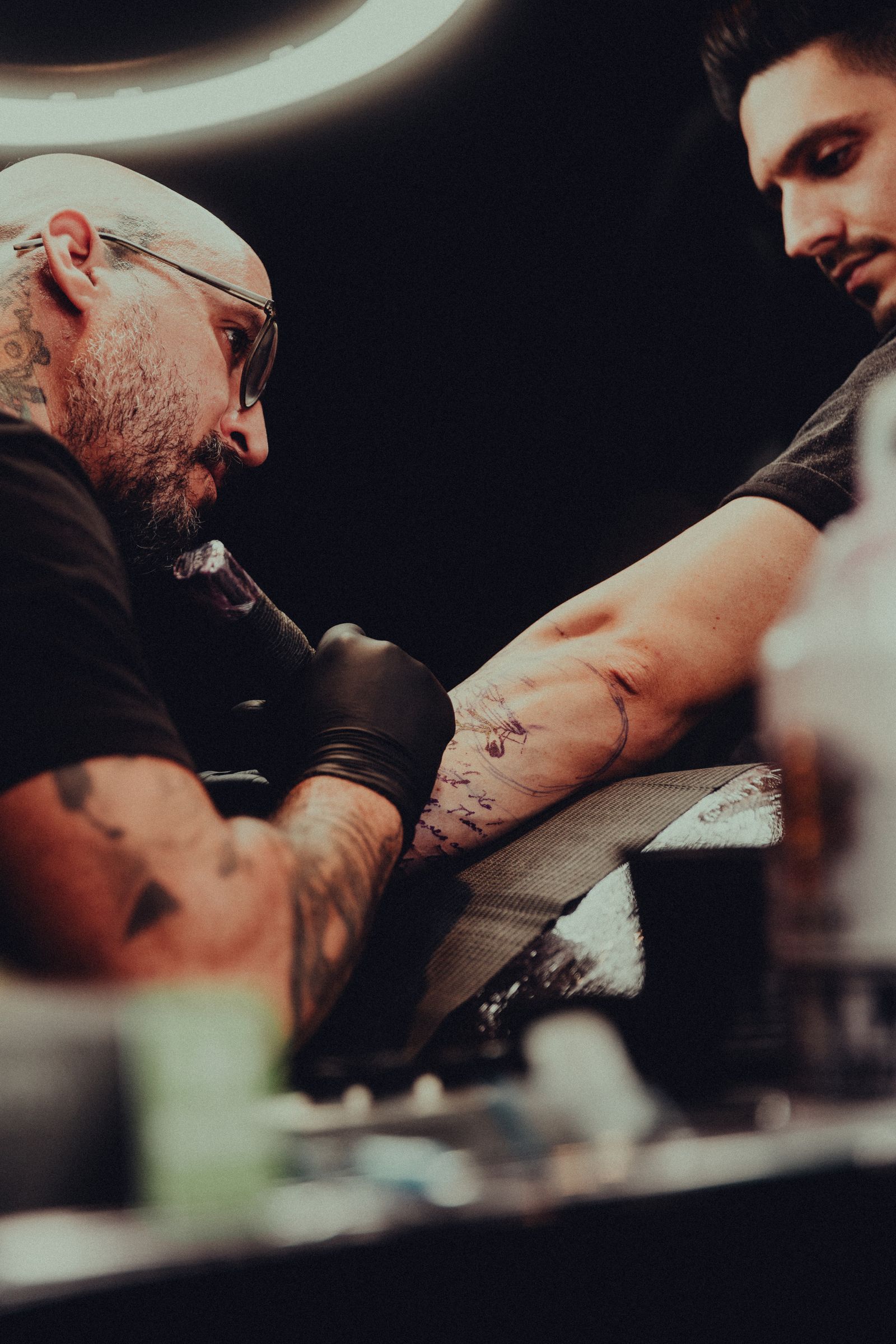
Choosing for the long term, step by step
- Decide what the piece must still say at arm's length. If the design should read clearly across a room in twenty years, bold lines and strong contrast do that job best.
- Match the style to the size. Fine line detail needs room. A small piece with many thin lines is the combination that blurs soonest, whatever the artist's skill.
- Pick placement with friction in mind. Hands, feet, and joints move and shed skin fastest, softening any style sooner. Upper arms, backs, and thighs hold detail longest.
- Ask to see healed work, not just fresh work. Fresh tattoos are at their sharpest. Healed photos a year or more old show how an artist's lines actually settle.
- Plan the sun habit before the tattoo. Consistent sunscreen on healed tattoos is the single biggest aging variable you control. Commit to it or choose bolder work.
- Leave the drawing to the artist. You supply the idea, references, and priorities. Scaling, spacing, and line weight decisions belong with the person who has watched work heal for years.
What bold work gives up, and what it keeps
Bold traditional work trades delicacy for durability. Thick outlines, solid fill, and limited fine detail hold shape and contrast through decades of summers. The cost is subtlety: gradients are simpler, tiny text is out, and the look is assertive even when the subject is soft. Fine line work keeps the subtlety. Single-needle pieces can look like pencil drawings on skin, at least while they are young, and many people happily accept a softer old age for a lighter look now. At a consultation at Chaos Tattoos, that trade, stated plainly, is the whole conversation. There is no trick answer, only an informed one.
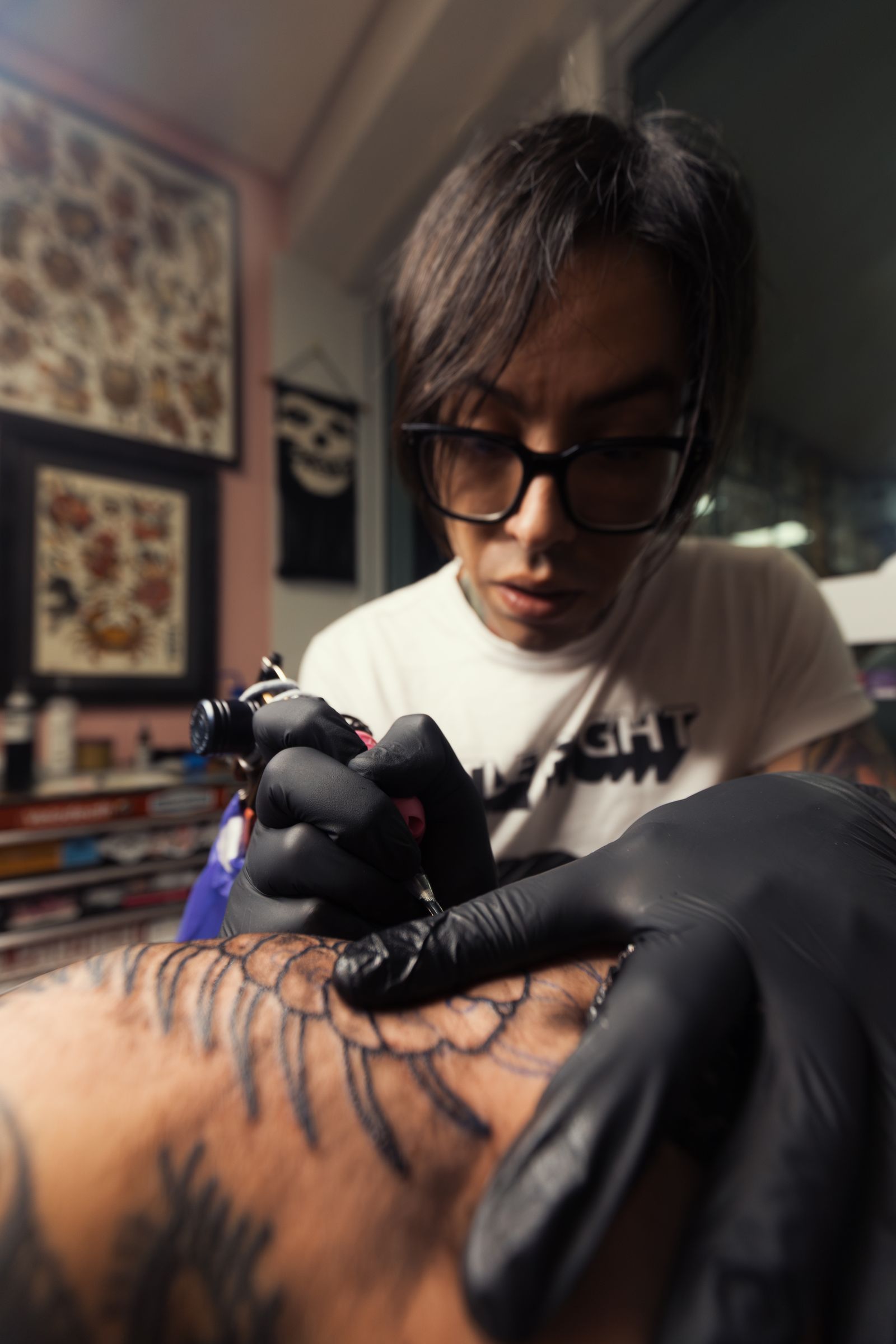
Your half of the bargain
Aftercare in the first two weeks sets the starting point, and sun care sets the slope after that. Ultraviolet light breaks down ink pigment, and Gastonia summers deliver plenty of it. Sunscreen on healed tattoos, shade during long outdoor work, and prompt attention to any area that heals rough all preserve lines of either style. Weight change, skin condition, and simple luck play roles too, which is why touch-ups exist. A design chosen with aging in mind needs fewer of them, and smaller ones when they come.
A quick self-test before you book
Find a photo of a tattoo you love that is at least five years healed, not fresh. If you still love how it reads softened by time, your taste matches how ink actually lives on skin, and the style conversation with your artist will be a short and happy one.
Common questions
Will a fine line tattoo disappear?
No. It softens and spreads rather than vanishing, and closely spaced details can merge over time. A well-sized fine line piece stays readable, just gentler than when new.
Does black ink age better than color?
Black generally holds contrast longest. Colors fade at different rates, with lighter tones going first, and sun exposure speeds all of it. Bold design helps every color.
Can an aged fine line piece be refreshed?
Often, yes. An artist can rework many softened pieces, sometimes by strengthening lines or building the design slightly bolder. Bring it in for an honest look before assuming.
Photos in this guide are representative stock images.
← All guides from Chaos Tattoos← Back to Chaos Tattoos